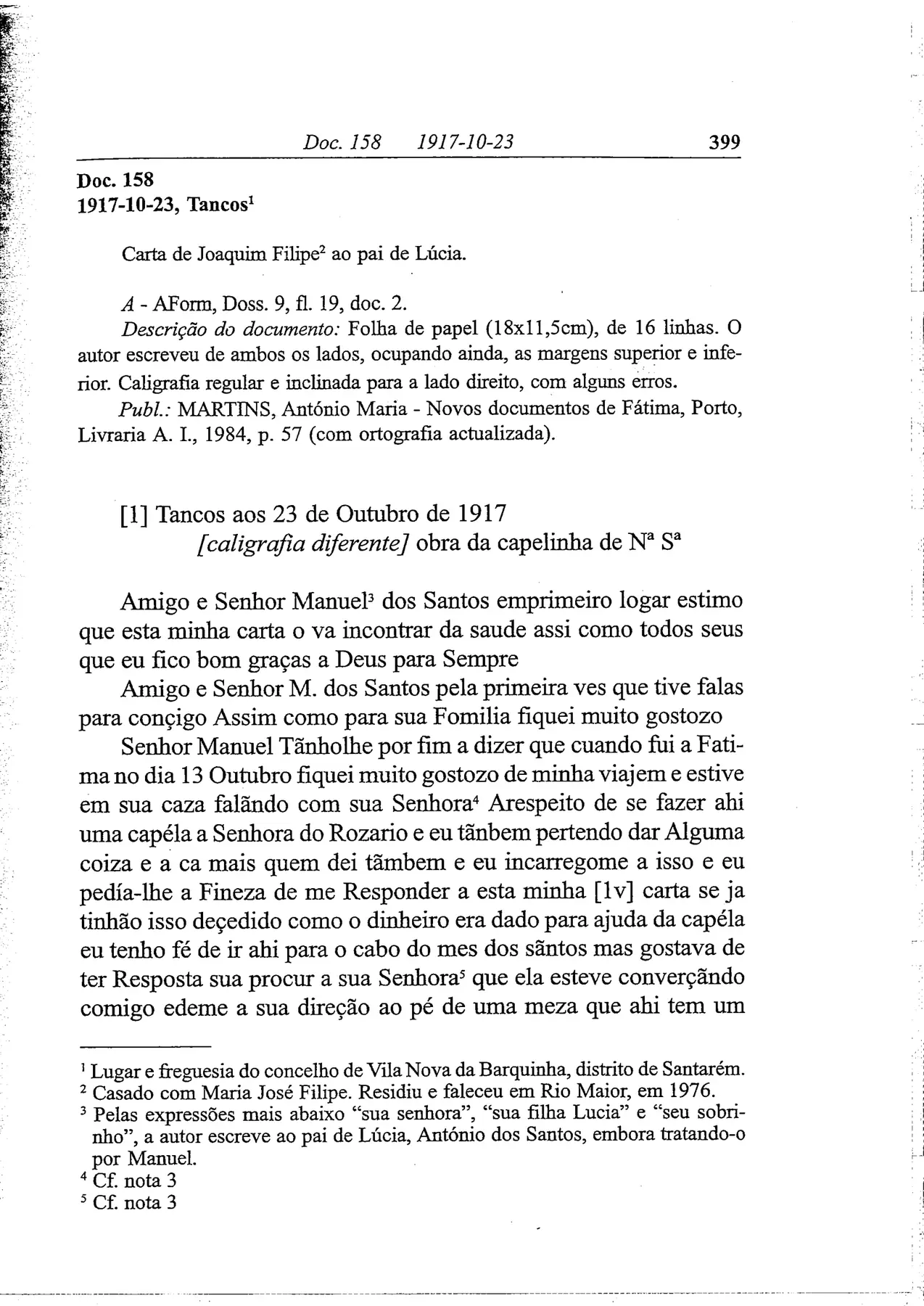
when I went to Fátima on 13 October I was very pleased with my trip, and I was at your house talking with your wife about building a chapel there to Our Lady of the Rosary. I too intend to give something, and there are others here who will give as well, and I will take charge of that. I would ask you the kindness of answering this letter of mine to say whether you had already decided on it, and how the money was to be given to help with the chapel. I expect to go there around the end of the month of the Saints*, but I would like to have an answer from you. Ask your wife, for she was talking with me and gave me your address, beside a table kept there by a young man in a black suit.
cuando fui a Fatima no dia 13 Outubro fiquei muito gostozo de minha viajem e estive em sua caza falãndo com sua Senhora Arespeito de se fazer ahi uma capéla a Senhora do Rozario e eu tãnbem pertendo dar Alguma coiza e a ca mais quem dei tãmbem e eu incarregome a isso e eu pedía-lhe a Fineza de me Responder a esta minha carta se ja tinhão isso deçedido como o dinheiro era dado para ajuda da capéla eu tenho fé de ir ahi para o cabo do mes dos sãntos mas gostava de ter Resposta sua procur a sua Senhora que ela esteve converçãndo comigo edeme a sua direção ao pé de uma meza que ahi tem um
Rapas de fatto Preto
Editors' notes (3)
1 Village and parish in the council of Vila Nova da Barquinha, district of Santarém.
2 Married to Maria José Filipe. He lived and died in Rio Maior, in 1976.
3 From the expressions further on, "your wife", "your daughter Lucia" and "your nephew", the author is writing to Lúcia's father, António dos Santos, although he addresses him as Manuel.
1 Lugar e freguesia do concelho de Vila Nova da Barquinha, distrito de Santarém.
2 Casado com Maria José Filipe. Residiu e faleceu em Rio Maior, em 1976.
3 Pelas expressões mais abaixo "sua senhora", "sua filha Lucia" e "seu sobrinho", o autor escreve ao pai de Lúcia, António dos Santos, embora tratando-o por Manuel.