English
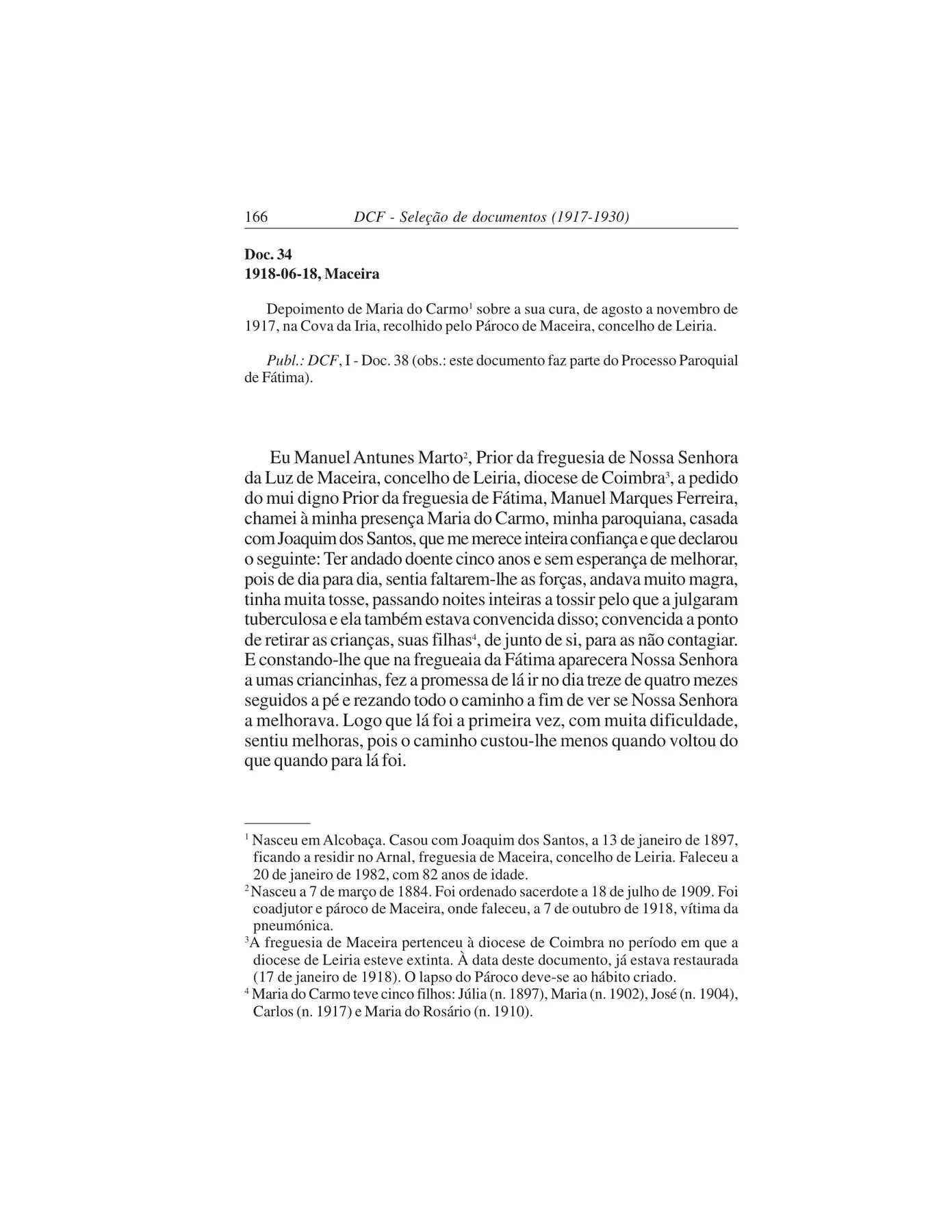
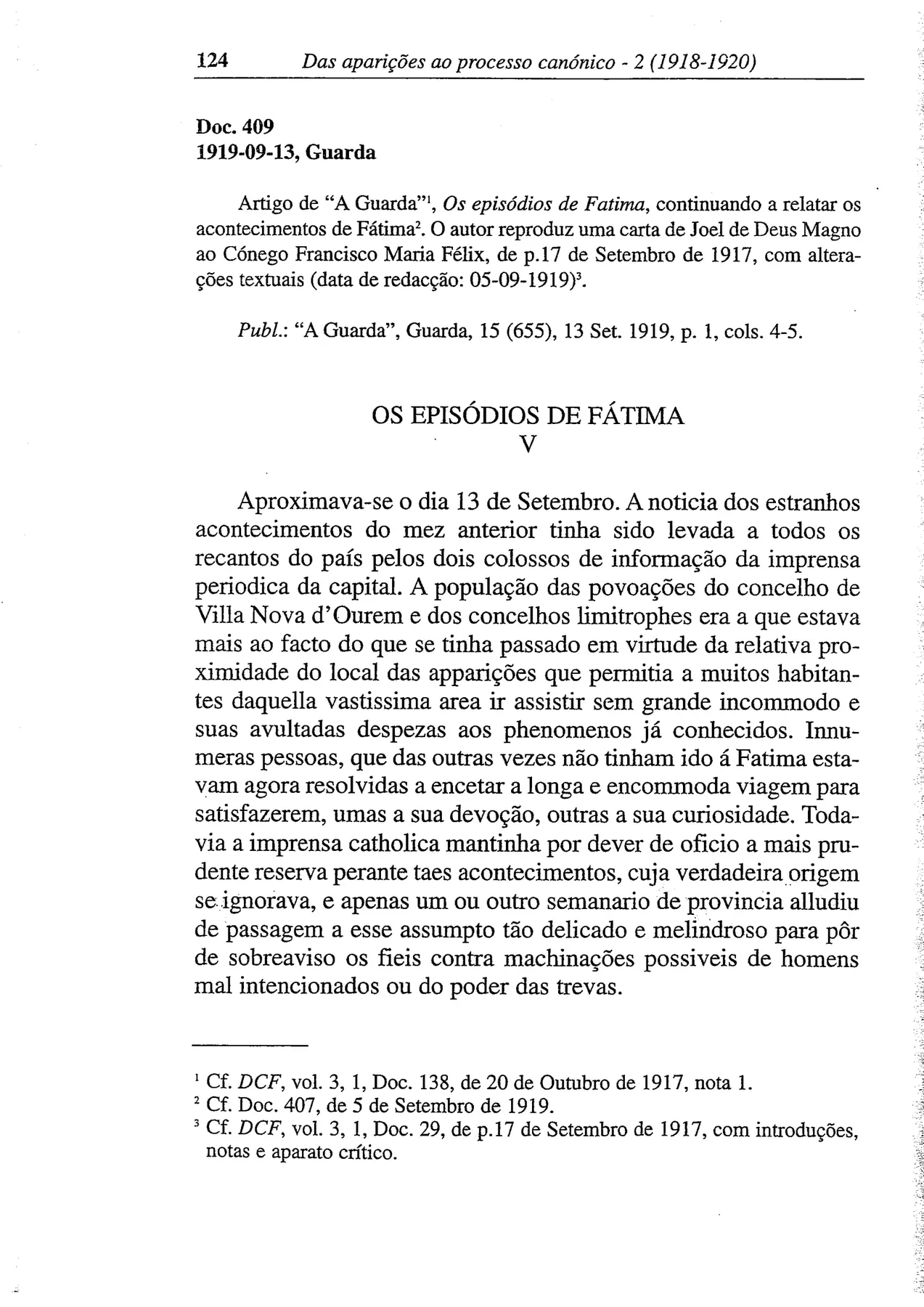
Maria do Carmo, forty-seven years of age, a native of the place of Arnal, parish of Maceira, council of Leiria, married to Joaquim dos Santos, had for five years been suffering from a rather serious illness which showed all the characteristic symptoms of tuberculosis. In the first phase of the illness she felt, from time to time, pains, not very strong ones, in the head, the stomach and the intestines. At the beginning of 1916 the pains grew extraordinarily worse. They were continuous and hard to bear. She then felt them in her back and, with even greater intensity, in her chest. At the same time she began to suffer from shortness of breath. Her hands, her feet and her belly swelled enormously. It was suspected that she had a tumour in the uterus. She was wasting away and growing thin before one's eyes. Three months later she did not look the same person, for from being well-nourished she had become extremely thin. She could not put any somewhat heavy object on her head because of the torments it caused her. She often felt like vomiting, though she did not vomit.
When she took any food, and while digestion lasted, the headaches increased. The stomach pains hardly let her sleep. So as not to be worse, she ate very little.
She lived exclusively or almost exclusively on milk.
A deep, dry cough tormented her chest ceaselessly. Her saliva often tasted of blood. All the neighbours were persuaded that the unfortunate woman was tubercular. She herself would not let her children come near her for fear of contagion. One individual who knew perfectly well the gravity of the illness, talking one day with some friends and seeing her pass close by, told them in a tone of voice that left no room for doubt that she was irremediably lost and would not live more than fifteen days. This was in the middle of July of last year. In vain did she seek relief for her ailments in the resources of medicine. Poor as she was, and there being no doctor except some kilometres away, at Batalha, she went there only once with her husband to consult the distinguished and skilful physician Dr. Padrão. The remedies this practitioner prescribed brought her no relief at all.
In these circumstances she harboured no illusions about the gravity of her condition and resignedly awaited death. At that time there was spreading from place to place, from one end of the country to the other, the consoling news that the Most Holy Virgin, since the previous month of May, had been appearing every month on the thirteenth to some humble little children who pastured livestock at a place commonly called “Cova da Iria”, belonging to the parish of Fatima, council of Villa Nova d'Ourem, seven leagues away from Maceira. A gleam of gentle hope suddenly lit up her downcast and embittered spirit. Full of faith, she invokes the Mother of God and, to obtain through her intercession the cure she so longed for, she makes a vow to go to Fatima four times on foot, barefoot. She chose the thirteenth of August to begin fulfilling her vow. But her husband, a God-fearing man for that matter, considering such an undertaking sheer recklessness, opposed her going. “We are poor,” he said to his wife, “we haven't the means to hire a carriage in which you could make the journey without danger and with a chance of getting there alive. Be patient, but I won't let you go”.
Indeed, her state of weakness was so great that she grew enormously tired when she walked, however little. About two hundred metres from the house where they live she owns a small plot of land. For a long time she had rarely gone there, and when she did, she needed to sit down countless times by the side of the path to rest. Her daughters did all the housework, their mother directing and allotting the various tasks, unable to help them as she wished, for her strength was failing. She insisted so much with her husband, however, that he, seeing her unshakeable confidence, gave in to her persistent entreaties and made up his mind to go with her. At last the thirteenth of August came, so ardently awaited. At one o'clock in the morning of that day the sick woman sets out in the company of her husband, who continued to regard such a journey as recklessness and madness. She rested several times on the way.
It was nine o'clock in the morning when she reached the place of the apparitions. She was quite exhausted, she felt a great deal of pain; she was, in her own words, all one pain. A few moments later, to her great surprise, she felt notable relief.
She sat down in the shade of a large, leafy holm oak, where she took some food, and stayed there until three o'clock in the afternoon, then setting off again. On the way back the pains were less intense and she did not feel as tired as on the way there.
From day to day the improvement became more and more marked. Meanwhile she began to take solid food, but her main food continued to be milk. On the thirteenth of September she went back to Fatima for the second time, the journey not causing her as much discomfort as on the thirteenth of August. Each time she went there she prayed the rosary both going and coming back, neither talking nor paying attention to the conversations of the people who accompanied her.
From that day on she improved still more.
She was already doing a little work in the house and went with less difficulty to the farm. On the thirteenth of October she set out early in the morning as on the other occasions, but before reaching Fatima she was caught by the memorable torrential rain that marked that autumn day. Although she got completely wet, the rain soaking the clothes she wore, she felt perfectly well at the place of the apparitions. The pains disappeared never to return. The swelling of the belly and of the upper and lower limbs likewise disappeared as if by enchantment. Having returned home, from that day until today she eats everything, at any hour of the day or night, and however indigestible the food may be, she feels not the slightest discomfort. She has not again felt shortness of breath. She works hard and can carry heavy loads on her head as before her illness. She has never had a cough again. She is plump, feels strong and enjoys excellent health. Never at any time in her life does she remember having been so well. On the thirteenth of November she went to Fatima again in order to give thanks for her cure to the Virgin of the Rosary
Português (original)
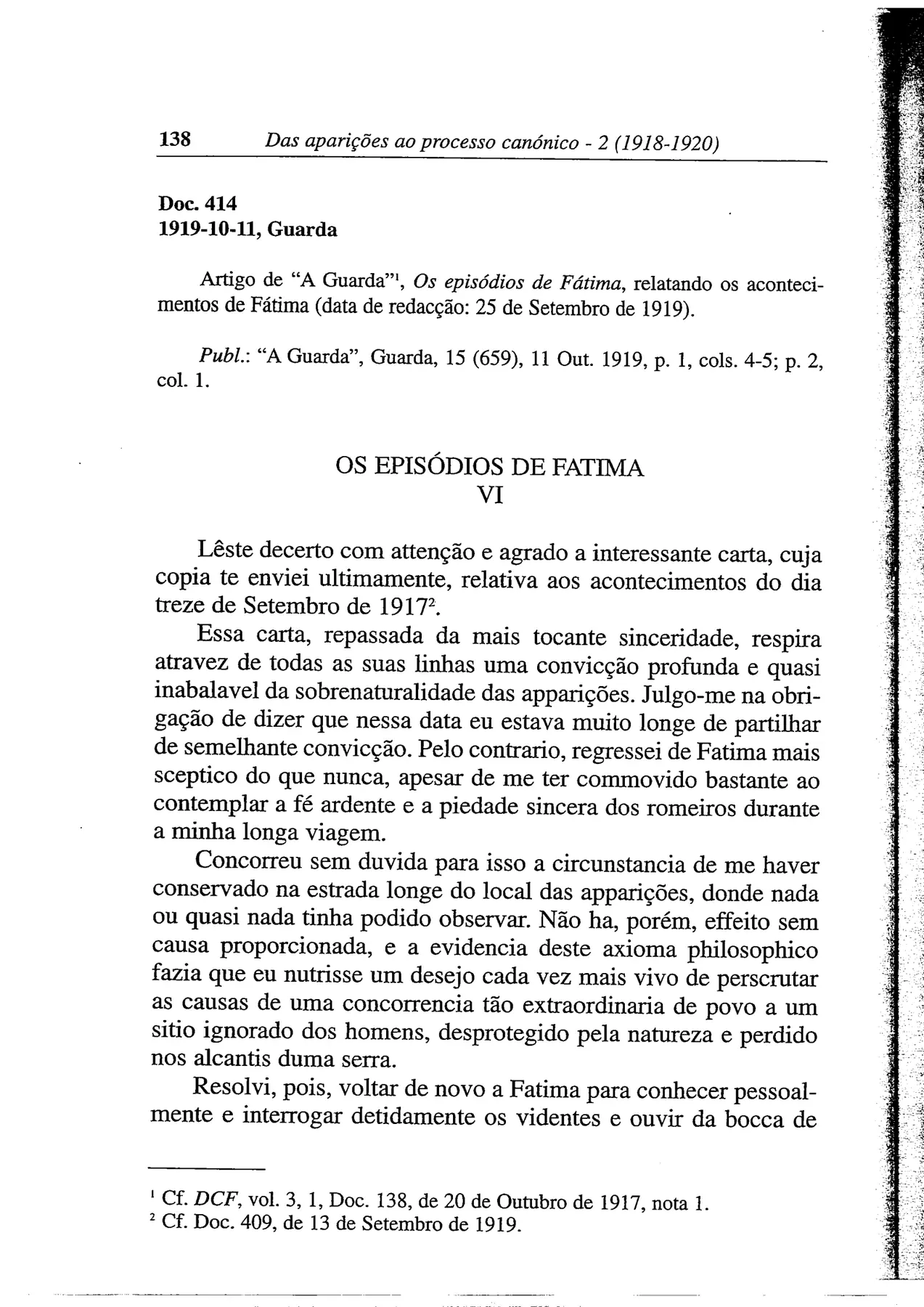
Maria do Carmo, de quarenta e sete annos de edade, natural do logar do Arnal, freguesia de Maceira, concelho de Leiria, casada com Joaquim dos Santos, havia cinco annos que soffria de uma enfermidade bastante grave, que apresentava todos os symptomas caracteristicos da tuberculose. Na primeira fase da doença experimentava, de vez em quando, dores, aliás não muito fortes, na cabeça, no estomago e nos intestinos. Em principios de 1916 as dores agravaram-se de um modo extraordinario. Eram continuas e difficeis de supportar. Sentia-as então nas costas e, ainda com mais intensidade, no peito. Ao mesmo tempo começou a padecer de falta d'ár. As mãos, os pés e o ventre incharam-lhe imenso. Suspeitava-se que tivesse um tumor no utero. Definhava e emmagrecia a olhos vistos. Trez meses depois não parecia a mesma pessoa, pois de nutrida que era tornara-se magra em extremo. Não podia pôr á cabeça nenhum objecto um pouco pesado pelas torturas que isso lhe occasionava. Tinha com frequência vontade de vomitar, embora não vomitasse.
Quando tomava algum alimento e enquanto durava a digestão, aumentavam as dores de cabeça. As dores de estomago quasi que não lhe permittiam dormir. Para não passar peor comia muito pouco.
Sustentava-se exclusivamente ou quasi exclusivamente de leite.
Uma tosse funda e secca atormentava-lhe sem cessar o peito. A saliva sabia-lhe muitas vezes a sangue. Todos os visinhos estavam persuadidos de que a infeliz se achava tuberculosa. Ella propria não deixava approximar de si os filhos com medo do contagio. Um individuo que conhecia perfeitamente a gravidade do mal, estando um dia a conversar com alguns amigos e vendo-a passar proximo, disse-lhes num tom de voz que não deixava margem a duvidas que ella estava irremediavelmente perdida, não devendo viver mais de quinze dias. Passava-se isto em meados de julho do anno proximo findo. Debalde procurou lenitivo para os seus incommodos nos recursos da medicina. Pobre como era e não havendo medico senão a alguns kilometros de distancia, na Batalha, só alli foi uma vez com o marido consultar o distincto e habil clinico dr. Padrão. Os remedios que esse facultativo receitou não lhe produziram allivio algum.
Nestas circunstancias não alimentava nenhuma illusões ácerca da gravidade do seu estado e aguardava resignadamente a morte. Por essa occasião corria de terra em terra, de um extremo ao outro do paiz, a nova consoladora de que a Virgem Santissima desde o mez de maio precedente apparecia todos os mezes no dia treze a umas humildes creancinhas que apascentavam gado num local vulgarmente denominado “Cova da Iria” pertencente á freguezia de Fatima, concelho de Villa Nova d'Ourem, a sete leguas de distancia de Maceira. Um clarão de suave esperança illuminou subitamente o seu espirito abatido e amargurado. Cheia de fé, invoca a Mãe de Deus e, para obter por sua intercessão a cura tão suspirada, faz a promessa de ir quatro vezes a Fatima a pé descalça. Escolheu o dia treze de agosto para iniciar o cumprimento da sua promessa. Mas o marido, aliás homem temente a Deus, considerando tal empreza uma verdadeira temeridade, oppoz-se á sua ida. “Nós somos pobres, dizia elle á mulher, não dispomos de recursos para alugar um carro em que possas efectuar a jornada sem perigos e com probabilidade de lá chegares viva. Tem paciencia, mas não te deixo ir”.
Na verdade o seu estado de fraqueza era tão grande que se cansava imenso quando caminhava, por pouco que fôsse. A cerca de duzentos metros da casa de habitação possue um pequeno predio rustico. Havia muito tempo que era raro lá ir e, quando o fazia, precisava de se sentar um sem numero de vezes á beira do caminho para descansar. As filhas faziam toda a lida da casa, indicando e distribuindo a mãe os diversos serviços, sem poder ajudá-las como desejava, por lhe minguarem as forças. Insistiu, porém, tanto com o marido que este, vendo a sua inabalavel confiança, accedeu ás suas porfiadas instancias e resolveu-se a acompanhá-la. Veio finalmente o dia treze de Agosto, tão ardentemente esperado. Á uma hora da madrugada desse dia a doente põe-se a caminho em companhia do marido, que continuava a considerar semelhante jornada como uma temeridade e uma loucura. Descansou varias vezes no percurso.
Eram nove horas da manhã quando chegou ao local das aparições. Estava bastante extenuada, sentia muitas dores, toda ella, segundo a sua propria expressão, era uma dôr. Alguns instantes depois, com grande surpresa, experimentou notaveis allivios.
Sentou-se á sombra de uma grande e copada azinheira, onde tomou algum alimento, e alli se conservou até ás tres horas da tarde, pondo-se então novamente em marcha. No regresso as dores eram menos intensas e não se sentia tão fatigada como á ida.
De dia para dia as melhoras accentuavam-se cada vez mais. Entretanto começou a tomar alimentos solidos, mas o seu principal alimento continuava a ser o leite. Em treze de Setembro voltou pela segunda vez a Fatima, não lhe causando a viagem tanto incommodo como em treze de agosto. De cada vez que lá ia resava o terço do Rosario tanto na ida como na volta, não conversando nem prestando attenção ás conversas das pessoas que a acompanhavam.
A partir desse dia melhorou ainda mais.
Já trabalhava um pouco em casa e ia com menos difficuldade á fazenda. A treze de Outubro partiu de manhã cedo como das outras vezes, mas antes de chegar á Fatima surprehendeu-a a memoravel chuva torrencial que assignalou aquelle dia de outomno. Apesar de se ter molhado toda, ensopando a chuva a roupa que vestia, sentiu-se perfeitamente bem no local das apparições. As dores desappareceram para não mais voltar. A intumescencia do ventre e dos membros superiores e inferiores desappareceu egualmente como que por encanto. Tendo regressado a casa, desde esse dia até hoje come de tudo, a qualquer hora do dia ou da noite, e, por mais indegestos que sejam os alimentos, não experimenta o mais leve incommodo. Não tornou a sentir falta d'ar. Trabalha muito e pode por á cabeça fardos pesados como antes da doença. Nunca mais teve tosse. Está gorda, sente-se forte e gosa de excelente saude. Jámais em tempo algum da sua vida, se lembra de ter passado tão bem. No dia treze de novembro foi de novo á Fatima afim de agradecer a sua cura á Virgem do Rosario